Standard or oversized transport: where is the line?
Why cargo size alone is not enough, and how to determine whether a shipment needs a special movement regime, permit or escort.
BGD-TRANS
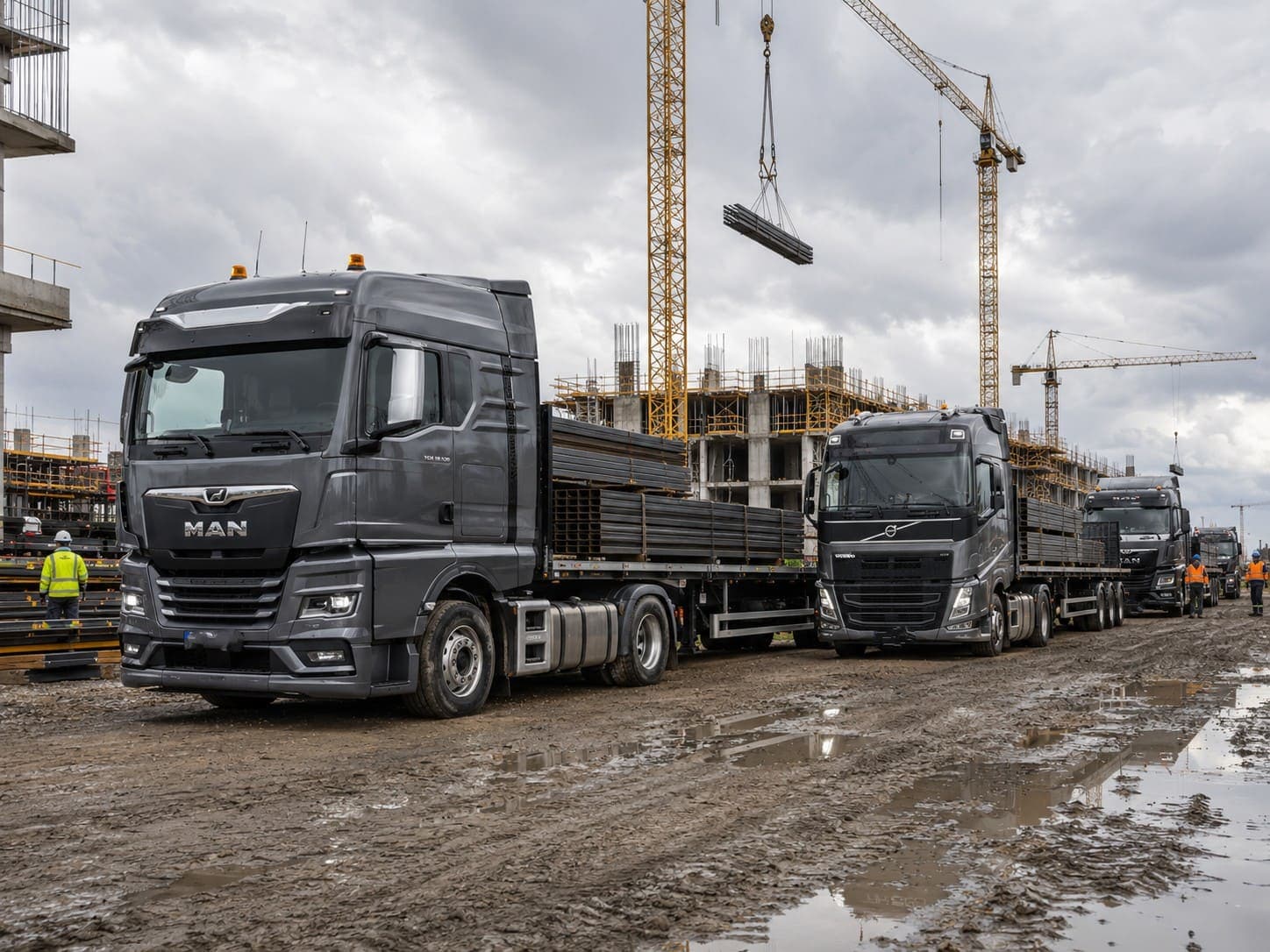
Clients often ask for the single width at which a load becomes oversized. In practice, one number is not enough. The complete vehicle-and-load combination, the rules on the intended route and the cargo's transport configuration all matter.
Standard freight remains within the ordinary road regime
Standard cargo can be carried on suitable equipment without exceeding the permitted dimensions, gross weight or axle loads. That does not make every standard shipment simple; it means the combination does not need a special regime solely because of its geometry or weight.
FTL and LTL shipments, palletised goods and many industrial products fall into this group when they are correctly distributed and secured.
For oversized transport, the combination crosses the line
A movement becomes abnormal when the loaded vehicle exceeds a limit that applies to the relevant road network or requires special operating conditions. Width, height, length, gross weight or axle load can be the reason.
The same machine may not always have the same transport status. Different equipment, removal of a safely detachable part or another weight distribution can change the final envelope. A different route can introduce a different set of restrictions.
Why there is no honest universal number
Exact limits and procedures depend on the country, road category, vehicle and other characteristics of the combination. Cross-border transport passes through several rule systems, so a number valid in one country cannot answer the whole route.
A responsible assessment therefore does not begin with 'it will definitely fit'. It begins with technical data and a route review. Only then can the carrier confirm whether a permit, escort, special movement window or adjusted route is required.
Three common examples
A construction machine can look too large but fit a standard envelope after proper transport preparation. An industrial assembly can be relatively light and still require special conditions because of its width. A compact, very heavy component may raise axle-load and capacity questions even though it does not look large in a photograph.
A photograph is therefore a starting point, not a technical assessment. Dimensions, weight, transport position and locations are still required.
How to get a reliable answer quickly
Send the information before booking cranes, installation teams or a production shutdown. An early review leaves more room to prepare the cargo efficiently and select a better vehicle combination.
- final cargo dimensions in transport position
- weight and centre of gravity, when available
- photos or a technical drawing
- exact locations and preferred timing
Confirm the classification before the quote
It is normal not to know which category your cargo falls into. You should not have to interpret road restrictions alone. Send the technical information to BGD-TRANS; we will assess the combination and explain what is required before confirming the transport.